
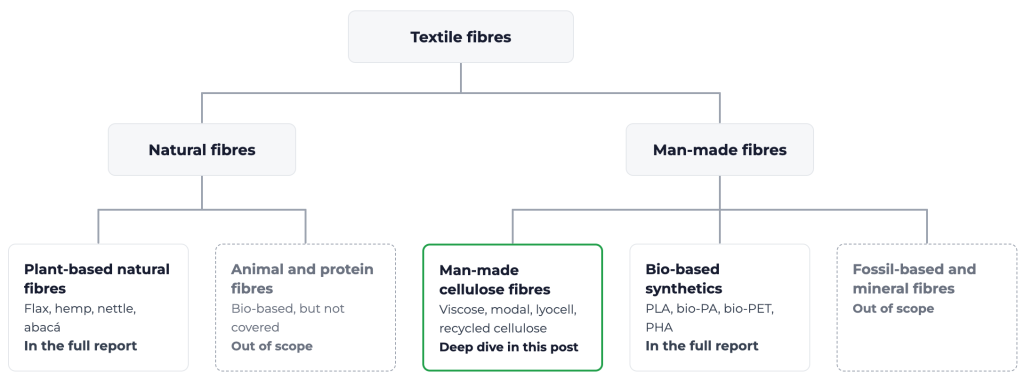
The Bio-based Industries Consortium (BIC) asked VCG.AI to map the bio-based textile fibres being made in Europe: what they are made from, who makes them and how ready they are. The report looks at three families of fibre. Natural plant fibres include flax (used for linen), hemp and nettle. Man-made cellulose fibres, such as viscose, lyocell and modal, are made by dissolving wood pulp and spinning it into thread. Bio-based synthetics are fibres like nylon and polyester made from plants instead of oil. Europe also relies on imports: EU households use about 8.5 million tonnes of textiles a year, but European fibre processing covers only about 4.8 million tonnes, and imports, mostly from Asia, make up the rest. Here are some of the things we found.
Three fibre families in the textile report
What our value chain intelligence shows
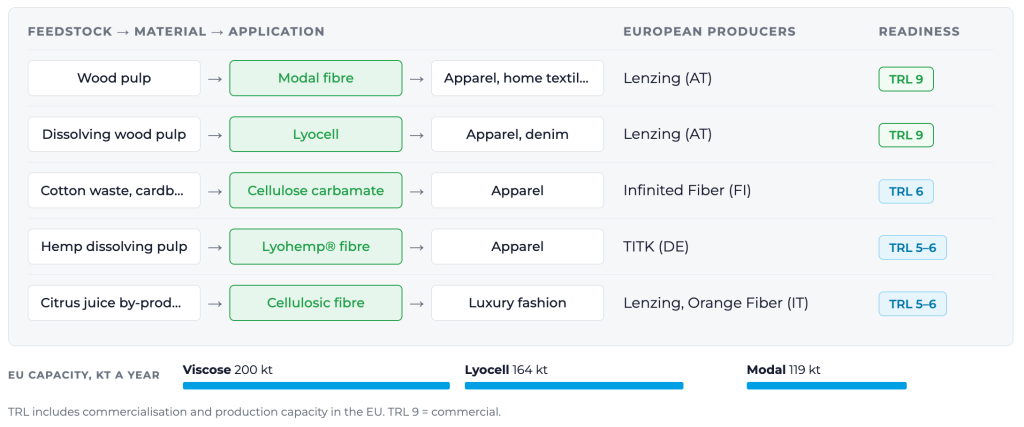
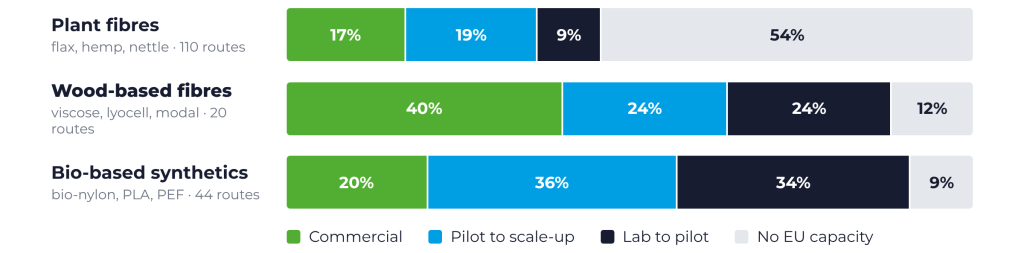
We ran this study on the VCG.AI platform, which connects feedstocks, technologies, producers, patents and market signals into one map of production pathways, from raw material to finished product. For BIC we narrowed it to fibres relevant to Europe and found more than 174 bio-based pathways across the three fibre families. Man-made cellulose fibres have 20 of them, and clothing and shoes is by far their largest use. EU plants can make around 200,000 tonnes of viscose, 164,000 tonnes of lyocell and 119,000 tonnes of modal a year.
Five active pathways for fibres made from wood and plant cellulose
Fibres made from wood are Europe’s strongest bet
The EU holds 22% of the world market for dissolving pulp, the raw material for man-made cellulose fibres, and makes 400,000–500,000 tonnes of these fibres a year. Four in ten of the routes we mapped in this group already run commercially in the EU, more than in any other fibre family. Most of these pathways serve clothing and shoes.
Some of these fibres are well established and others are still being developed. Lenzing in Austria makes modal from beech wood and lyocell from wood pulp, both on a large commercial scale. Infinited Fiber in Finland turns cotton waste and cardboard into a cotton-like fibre. TITK in Germany has developed Lyohemp®, a fibre made from hemp. Orange Fiber in Italy makes silk-like fabric from what is left over after citrus fruit is juiced.
Wood-based fibres are the furthest along in Europe
Case study: a new wood fibre heading for the factory
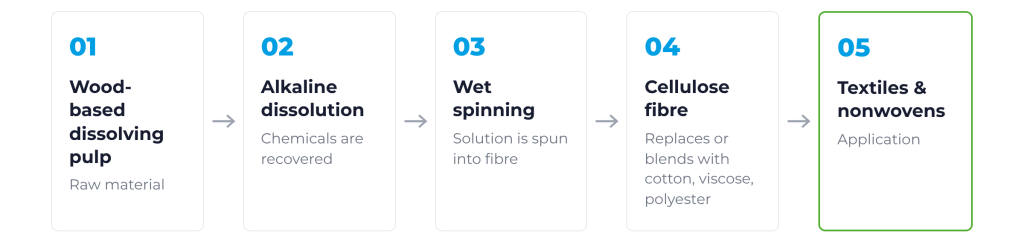
TreeToTextile, a Swedish company, has developed a new way to turn wood into textile fibre. It dissolves wood pulp in an all-alkaline process, spins the solution into fibre and recovers the chemicals afterwards. The aim is to use fewer resources and cause less environmental harm than the usual methods. The fibre can replace or be blended with cotton, viscose or polyester.
How TreeToTextile turns wood into textile fibre
It has already been made into t-shirts, dresses and jackets, along with samples of home textiles. The company is backed by Lenzing, H&M Group, Inter IKEA Group and Stora Enso, so two of the biggest clothing and home brands in the world are interested as potential buyers. TreeToTextile has moved from a pilot to a demonstration plant in Sweden that can make 1,500 tonnes of fibre a year and is now working on scaling up.
Three newer fibres to watch
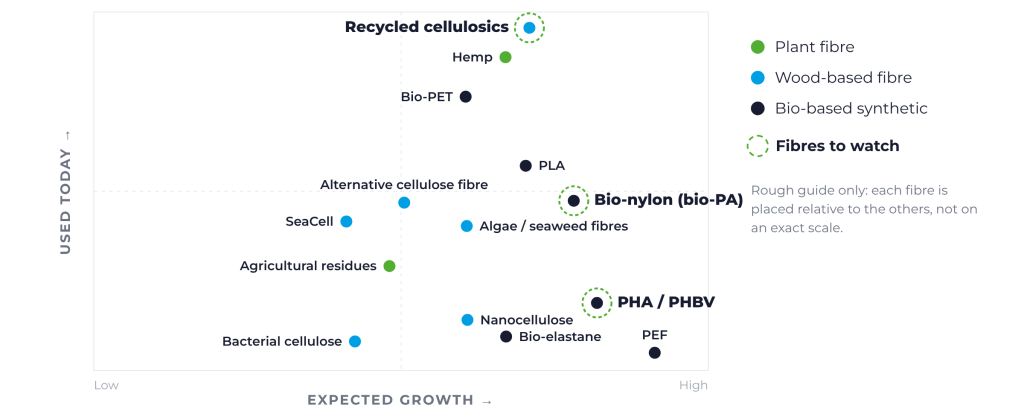
Recycled cellulose fibres are made by dissolving old cotton and viscose clothes back into pulp and spinning them into new viscose, lyocell or modal. That closes the loop without cutting down more trees.
Bio-based nylon is made from castor oil and performs as well as nylon made from oil. A lot of research is going into using it in sportswear, tights and car interiors, where nylon and elastane are the hardest materials to replace.
PHA is a family of polyesters made by bacteria that feed on sugar or waste oils. It has been shown to biodegrade 40% faster than standard bio-based polyester blends.
New fibres: expected growth vs. use today
Why it’s still hard
Europe makes 400,000 to 500,000 tonnes of wood-based fibre a year but only 100 to 2,000 tonnes of bio-based synthetics, and many synthetic projects launched after 2020 were dropped by 2025 because they could not match prices from Asia. Raw materials and production are spread thinly across Europe, which keeps costs high. To scale up, the industry needs pooled raw-material supply, brands that commit to buying the fibres and regulation that supports them.
Get the full report
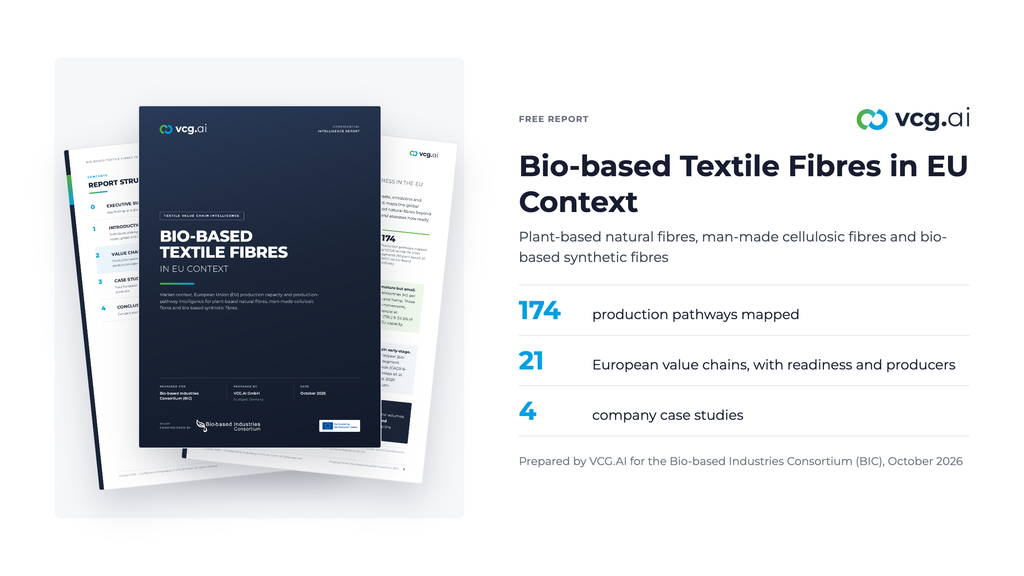
This post covers a small part of the study. The full report maps 174 production routes across all three fibre families, shows how ready each one is in Europe, names the European producers behind them and includes four company case studies. Email us at hello@vcg.ai or click the button below and we’ll send it to you free of charge.