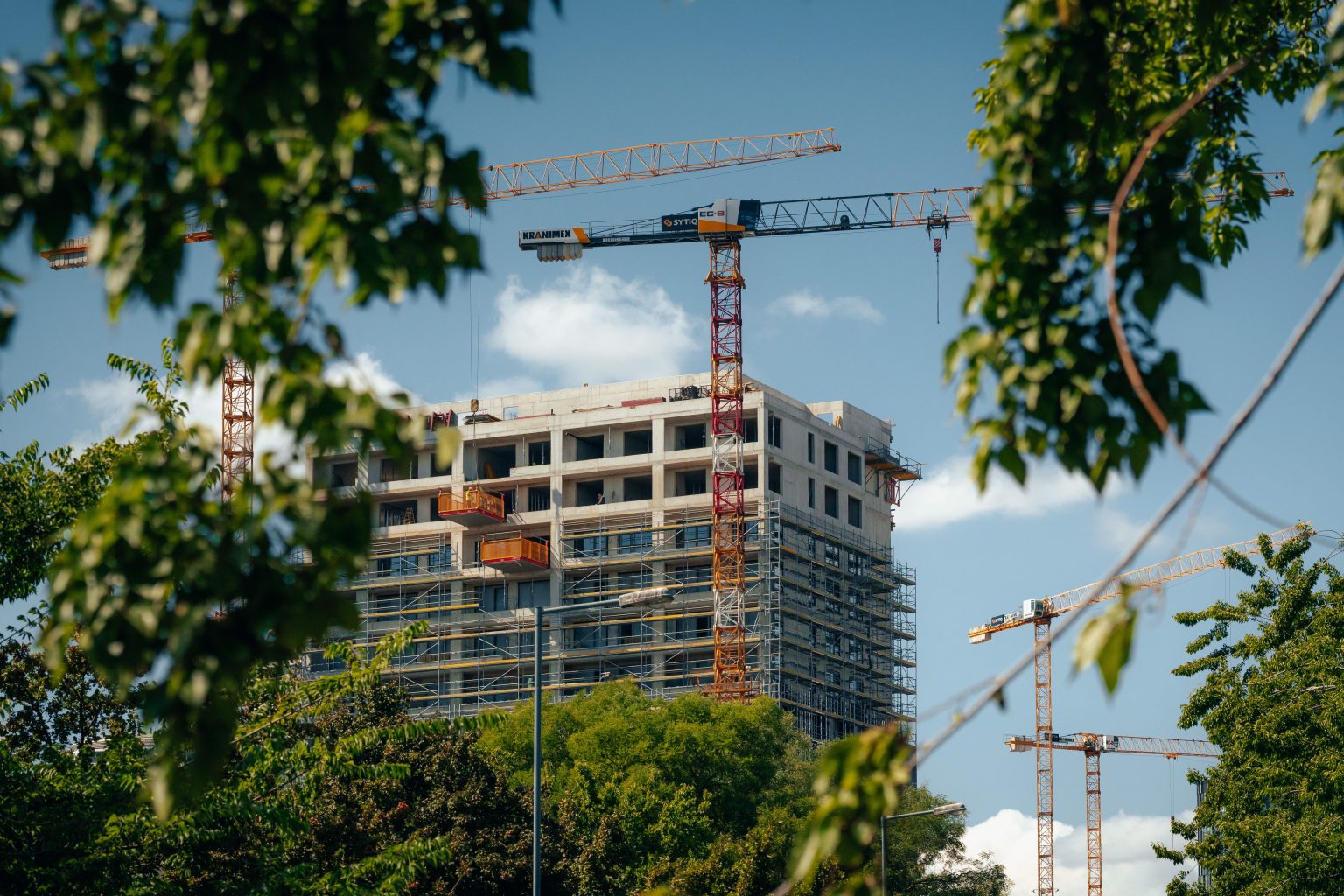

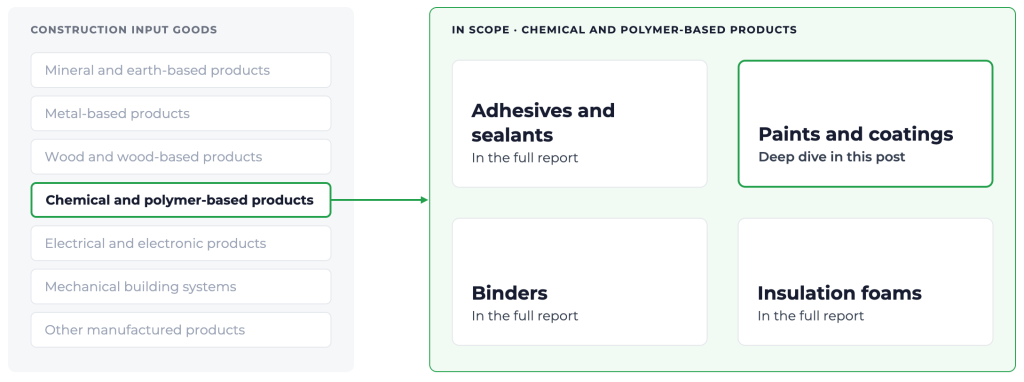
The Bio-based Industries Consortium (BIC) asked VCG.AI to find out which bio-based materials are already going into European buildings, who makes them and how ready they are. Bio-based means the material starts from plants, wood or farm leftovers instead of oil, gas or mined minerals. It matters because buildings use around 40% of the EU’s energy and about half of its extracted raw materials. Renovation, now the larger part of residential construction, uses insulation, adhesives, sealants and coatings far more heavily than new building does. The full report covers four groups of materials: adhesives and sealants, paints and coatings, binders, and insulation foams. Here are some of the things we found.
Four material groups in the construction report
What our value chain intelligence shows
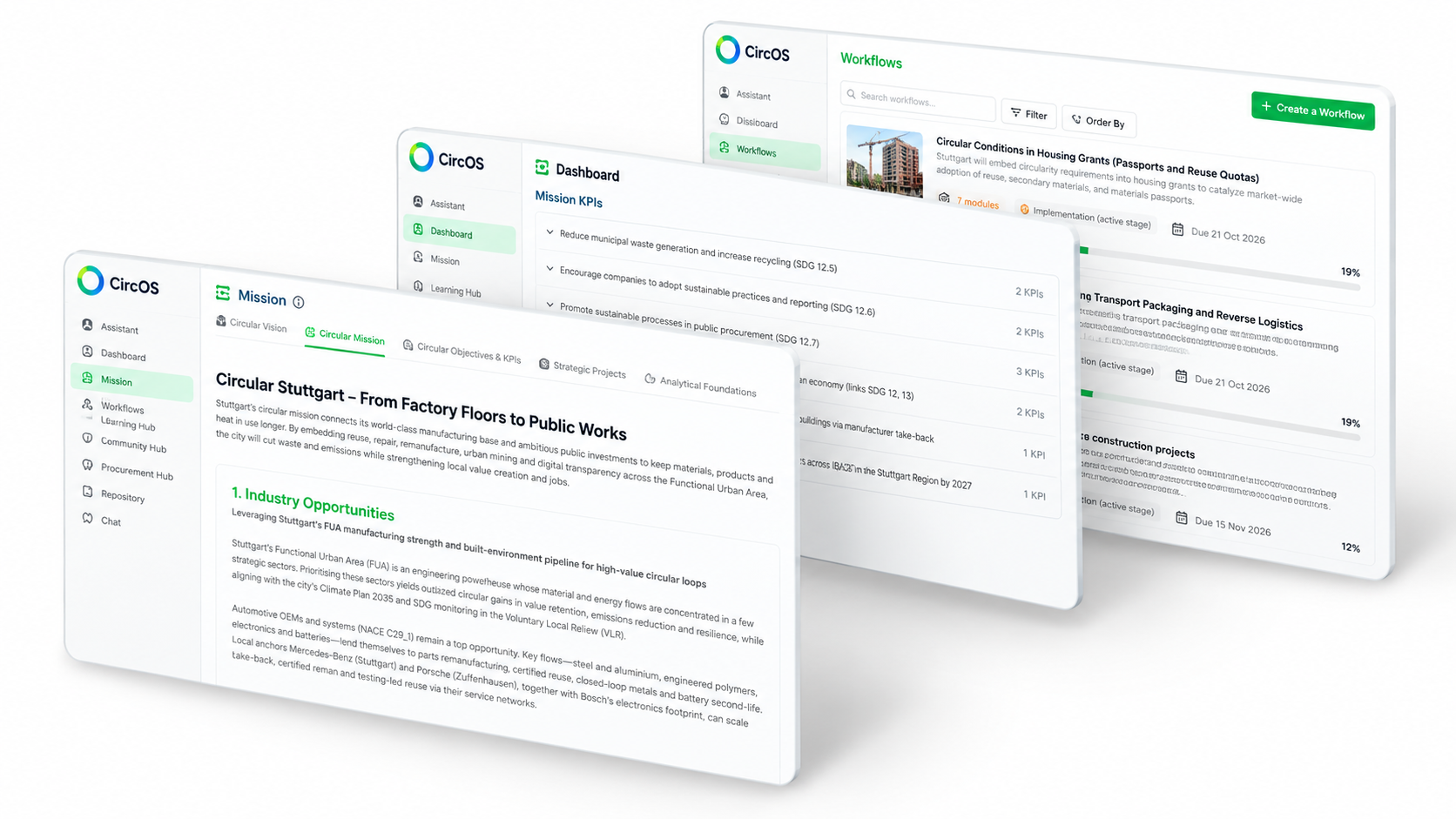
We built this study on the VCG.AI platform, which connects feedstocks, technologies, producers, patents and market signals into one map of production pathways, from raw material to finished product. For BIC we narrowed it to construction materials used in Europe and found more than 118 bio-based pathways across the four material groups. A pathway only counts as active if there is public evidence that a company in Europe is selling or developing it.
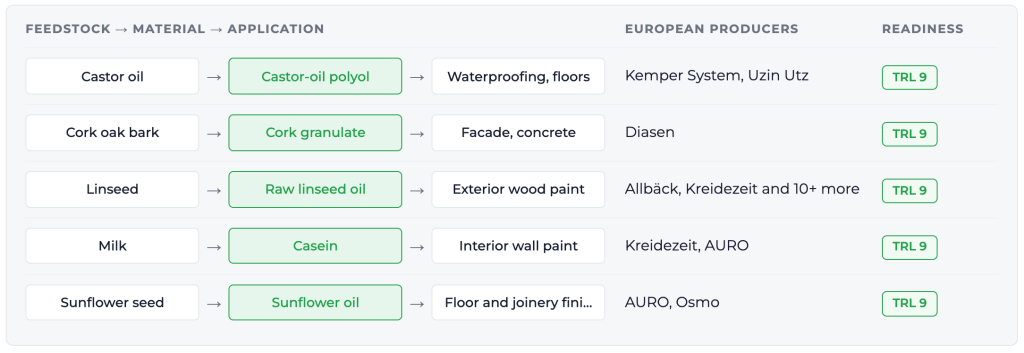
Five bio-based paint and coating pathways already on sale in the EU
Selected from the 45 bio-based pathways the VCG.AI platform mapped for paints and coatings. Each one has named European producers.
Paints and coatings are already on the shelf
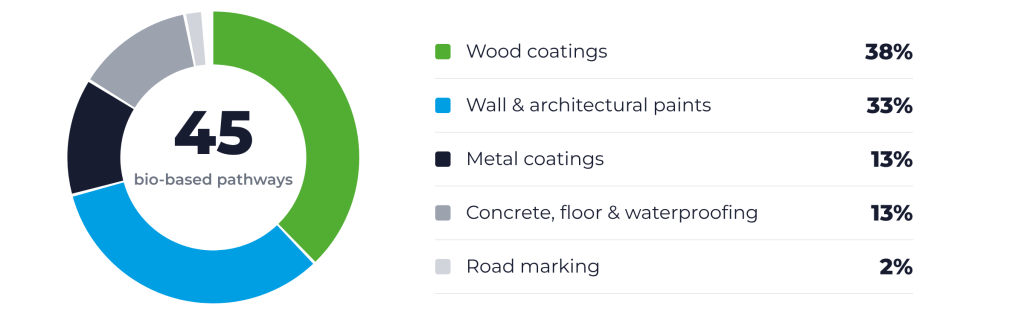
We found 45 bio-based pathways for paints and coatings. A pathway is a route from a raw material, such as a seed or a tree, to a finished product. The market for bio-based paints and coatings is worth around €10.7 billion worldwide and €3.7 billion in the EU, and it grows about 5.3% a year. Of the 45 pathways, most serve wood coatings (38%) and wall paints (33%), followed by metal coatings and by concrete, floor and waterproofing coatings at about 13% each.
Many of these products use ingredients people have painted with for centuries. Linseed oil goes into outdoor paint for wood and metal, and Allbäck and Kreidezeit are among more than ten producers. Casein, a protein from milk, is used in interior wall paint by Kreidezeit and AURO. Sunflower oil ends up in floor and joinery finishes from AURO and Osmo. Castor oil is used in waterproofing and floor coatings by Kemper System and Uzin Utz, and Diasen uses cork granules in facade coatings and concrete protection.
Where bio-based paints and coatings are used
Case study: a white pigment made from wood
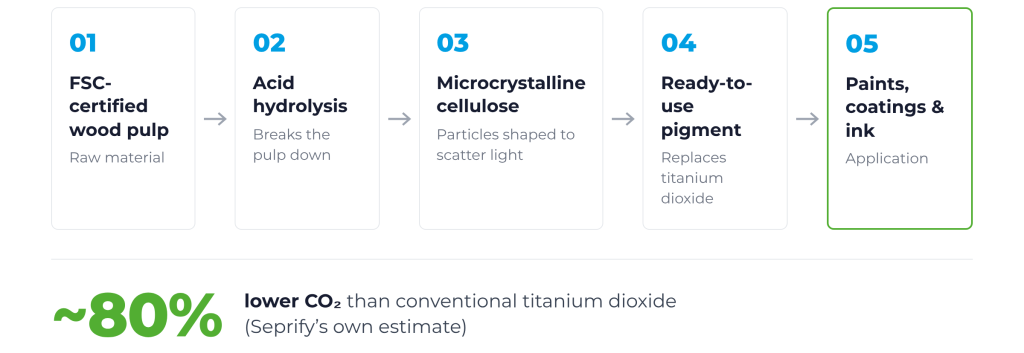
Most white paints, inks and coatings get their whiteness from titanium dioxide, a mineral pigment. Seprify, a Swiss company, makes an alternative from cellulose, the main building block of wood. It breaks down FSC-certified wood pulp into microcrystalline cellulose and shapes the particles so they scatter light the way titanium dioxide does. Seprify estimates its pigment causes about 80% less CO₂ than the conventional one.
How Seprify makes a white pigment from wood
The company has grown from a pilot making 1 tonne a year to manufacturing several hundred tonnes a year with European partners. In 2026 it raised €13.4 million from investors including Inter IKEA Group, Una Terra and Zürcher Kantonalbank, bringing its total funding to over €22 million. Paint, coating and ink makers can already order it for large commercial trials through the distributor Grolman Group, and IKEA is testing it for coatings and surface finishes.
Easy to swap in, hard to scale up
Most bio-based innovation in construction swaps a new ingredient into a product builders already know, so it is easier to adopt. Plant-oil coatings and bio-based binders already run at commercial scale, while insulation foams have the most routes still in research. The products that succeed will need a reliable supply of raw material and a competitive price.
Get the full report
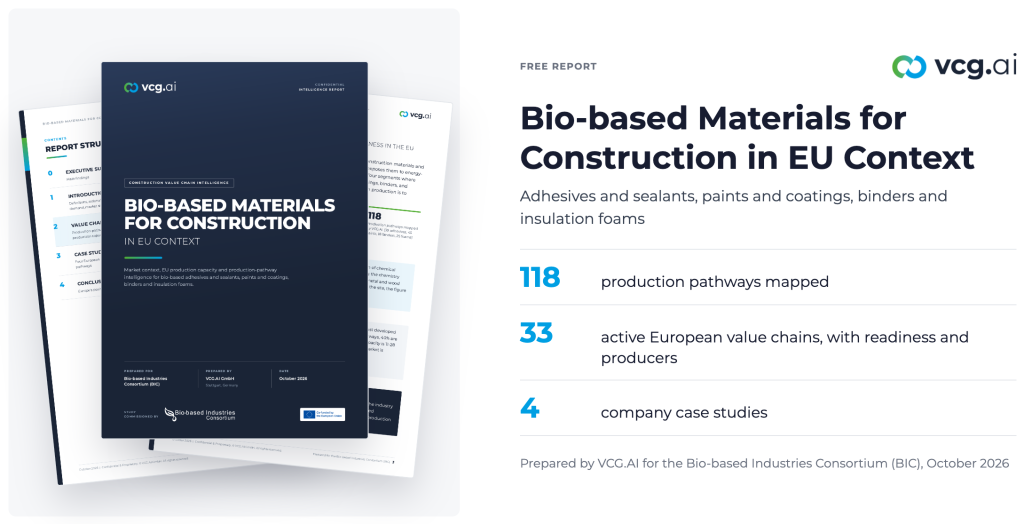
This post covers a small part of the study. The full report goes through all four material groups, including adhesives, binders and insulation foams, and names the European producers behind each pathway along with how mature each one is. Email us at hello@vcg.ai or click the button below and we’ll send it to you free of charge.