
EXECUTIVE INSIGHTS
Bio-based Polypropylene (BB-PP) represents a scalable opportunity to strengthen European automotive supply chains while reducing dependency on fossil-based inputs. VCG.AI’s value chain intelligence gives strategic insights into Europe’s position to lead in the industrialisation of renewable polypropylene.
EXECUTIVE SUMMARY
Bio-based Polypropylene: Europe Has the Technical Foundations, Scaling Will Determine Leadership
Bio-based Polypropylene is technically mature, commercially validated, and supported by diversified European feedstock potential. Production technologies are established across feedstock processing, precursor conversion, and polymerisation, and early automotive adoption confirms industrial feasibility.
The remaining challenge lies in expanding coordinated capacity across the full value chain, from feedstock sourcing and precursor conversion to polymer production, compounding, and OEM integration. Realising this opportunity will depend on accelerating value chain coordination, securing long-term off-take commitments, and aligning regional feedstock and conversion capacity with automotive-grade demand.
Case Study Scope
Commissioned by the Bio-based Industries Consortium (BIC), this study evaluates the industrial scalability of Bio-based Polypropylene (BB-PP) as a drop-in renewable alternative to fossil-based polypropylene in European automotive applications. Using VCG.AI’s circular intelligence platform, the analysis integrates market demand, feedstock availability, technology maturity, and value chain positioning to assess Europe’s capacity to lead in renewable polypropylene for vehicle systems.
The scope covers end-to-end value chain dynamics, identifying structural advantages, scaling constraints, and strategic intervention points relevant to automotive vehicle manufacturing within the European context.
Material Context
Bio-based Polypropylene (BB-PP)
The automotive sector is one of Europe’s most material-intensive industries, with plastics playing a central role in cost efficiency, lightweighting, and component performance. Polypropylene (PP) is one of the most widely used thermoplastics in automotive production, valued for its low density, chemical resistance, durability, and processability.
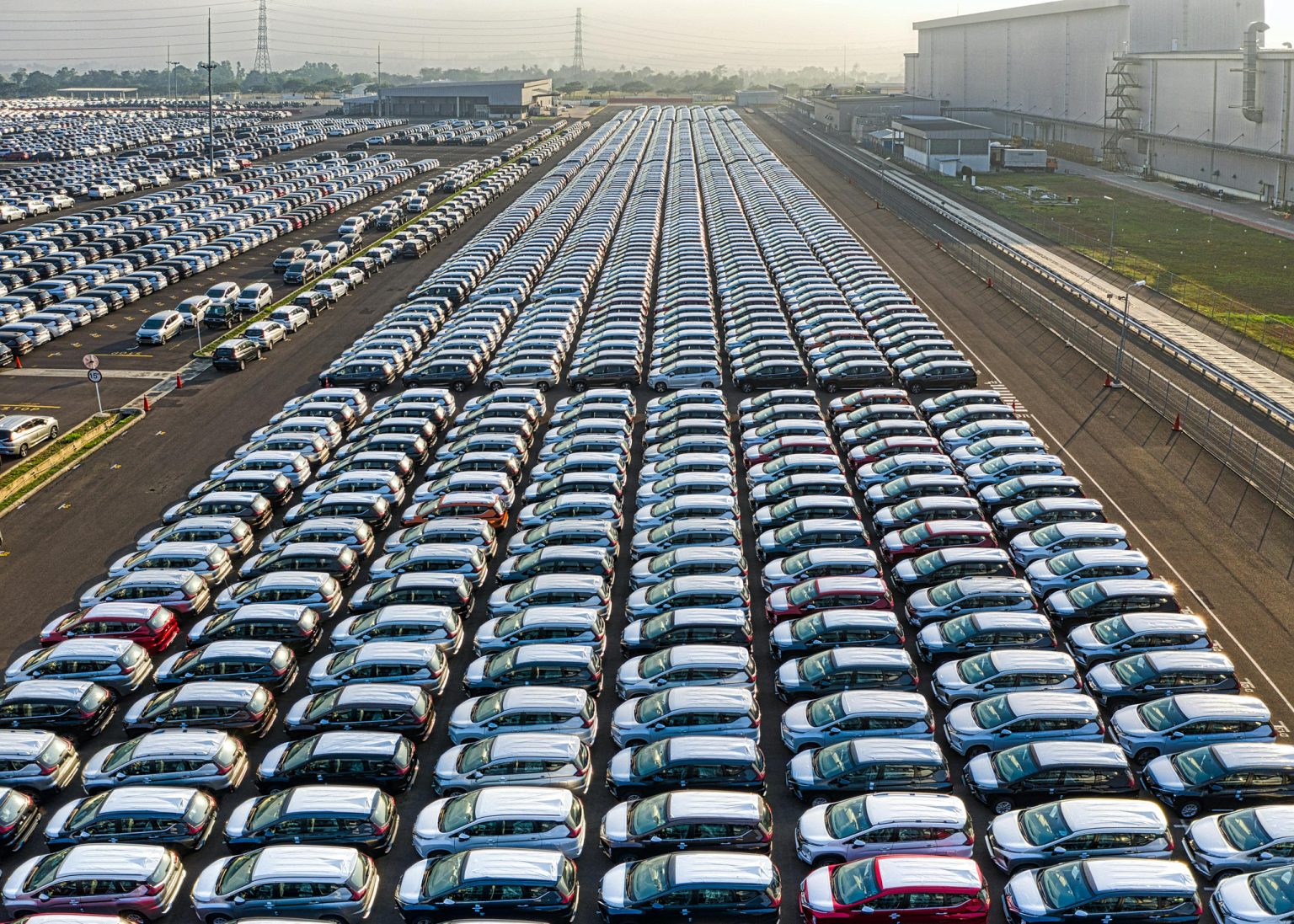
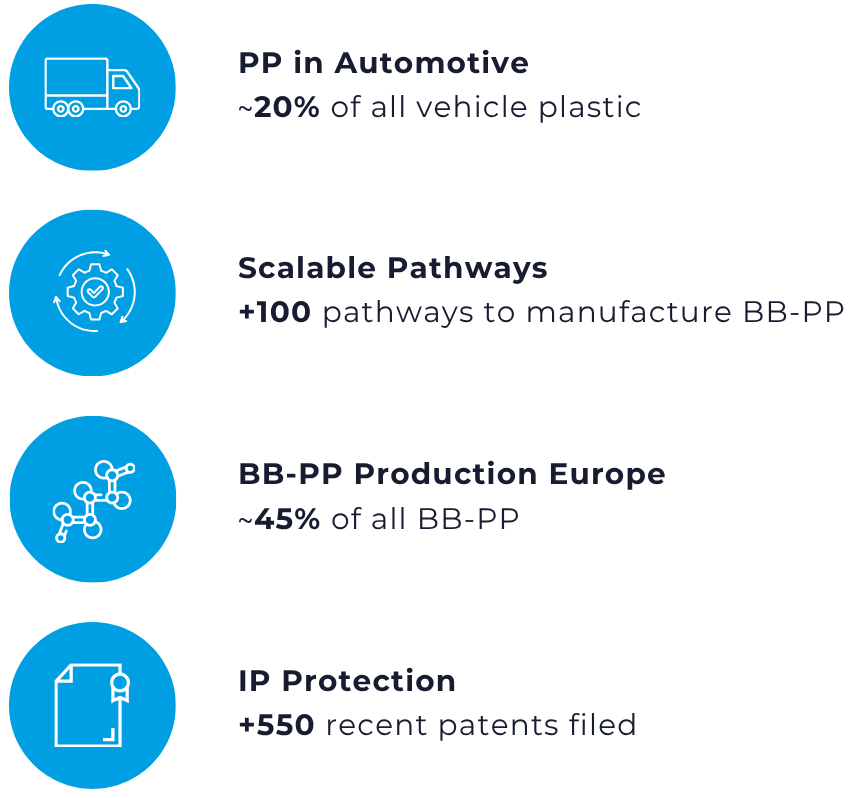
PP is a foundational material in both interior and exterior vehicle systems, commonly used in non-critical structural components requiring toughness and durability (interior trims, door panels, dashboards, bumper fascias, protective housings, wheel-arch liners, brackets, cable housings, and storage fixtures). Polypropylene automotive system footprint:

Bio-based Polypropylene (BB-PP) is a renewable alternative to fossil-derived PP that is chemically identical to its conventional counterpart, retaining the same molecular structure and performance characteristics. This enables direct substitution without modification to existing manufacturing processes or component specifications.
Given polypropylene’s system-wide presence, transitioning from fossil-based PP to renewable alternatives presents an opportunity to strengthen European automotive supply-chain resilience and reduce dependency on petrochemical inputs.
Market Intelligence and Demand Forecast
A 58% forecasted growth in polypropylene demand drives a structural pull for renewable alternatives
Global polypropylene demand is projected to increase from approximately 70 million tons today to 111 million tons by 2035, representing a 58% rise in overall market volume. This structural expansion in polymer demand creates sustained pressure for alternative supply pathways, including renewable feedstocks.
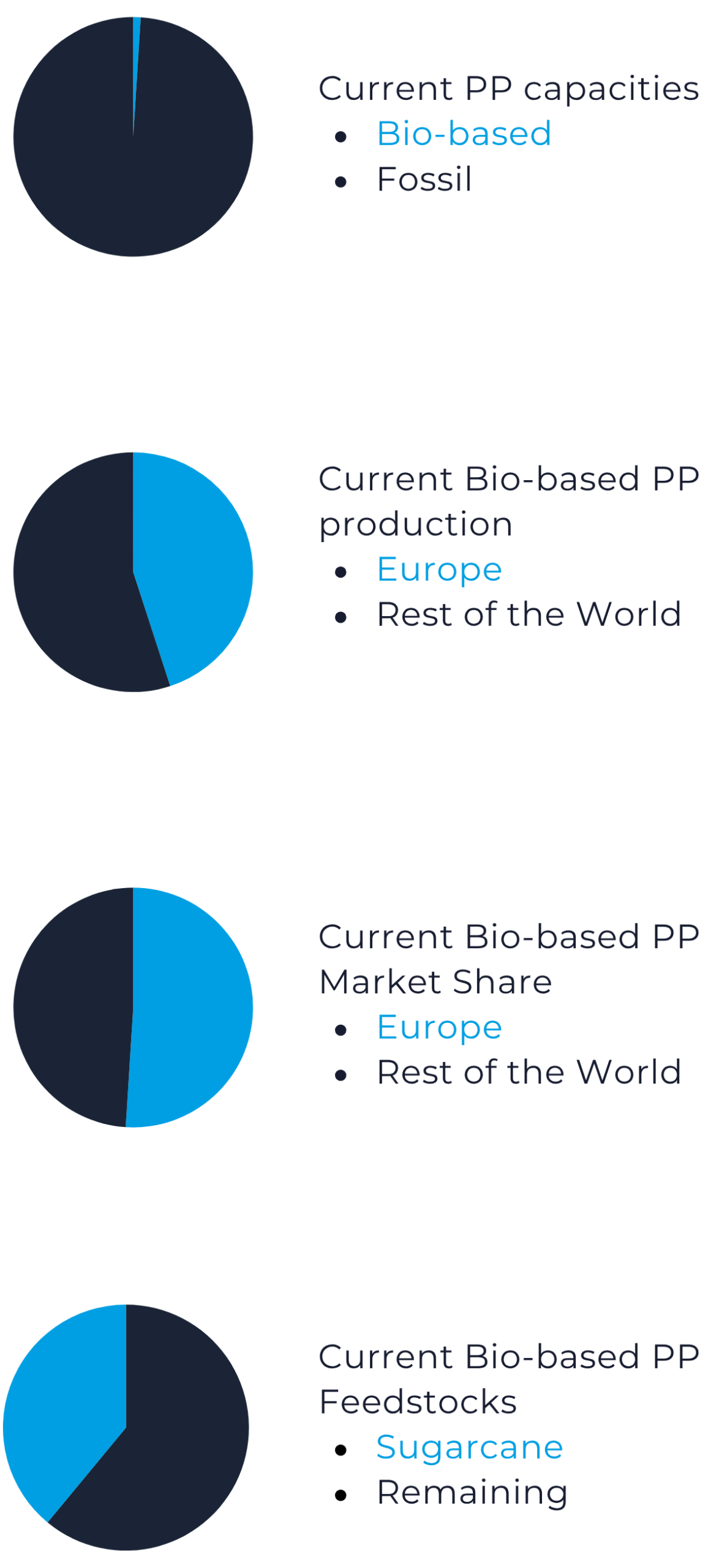
Within this trajectory, bio-based polypropylene remains a small but expanding segment. Current production of approximately 50 kton is projected to scale to around 260 kton, corresponding to an estimated global market value of nearly USD 392 million. While still a fraction of total PP demand, this growth signals early-stage industrialisation rather than experimental deployment.
Europe represents a significant concentration of both demand and production capacity
The region accounts for approximately 44–51% of global bio-based PP consumption, while hosting roughly 45% of total production capacity. This alignment between market uptake and manufacturing infrastructure positions Europe to play a central role in scaling renewable polypropylene.
Feedstock diversification will be critical to scaling production volumes and strengthening supply-chain resilience
Current bio-based PP production is heavily concentrated in sugarcane-derived pathways, which account for approximately 61% of feedstock input. Emerging alternatives, including vegetable oils, used cooking oil, tall oil, animal fats, lignocellulosic biomass, and starch-rich crops, present opportunities to diversify supply sources.
Value Chain Intelligence and Industrial Readiness
TRL 9 maturity across key production stages confirms technical deployability in Europe
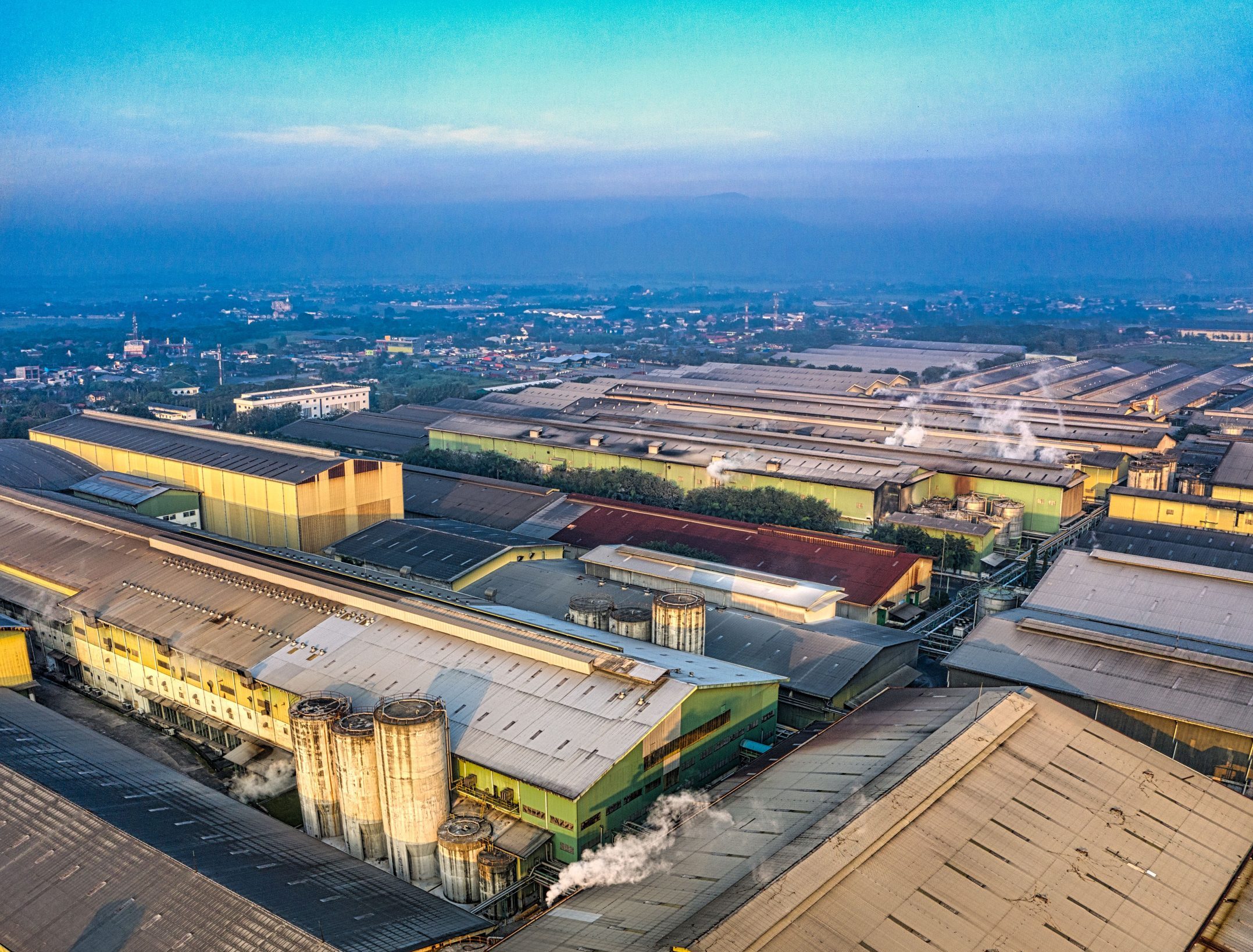
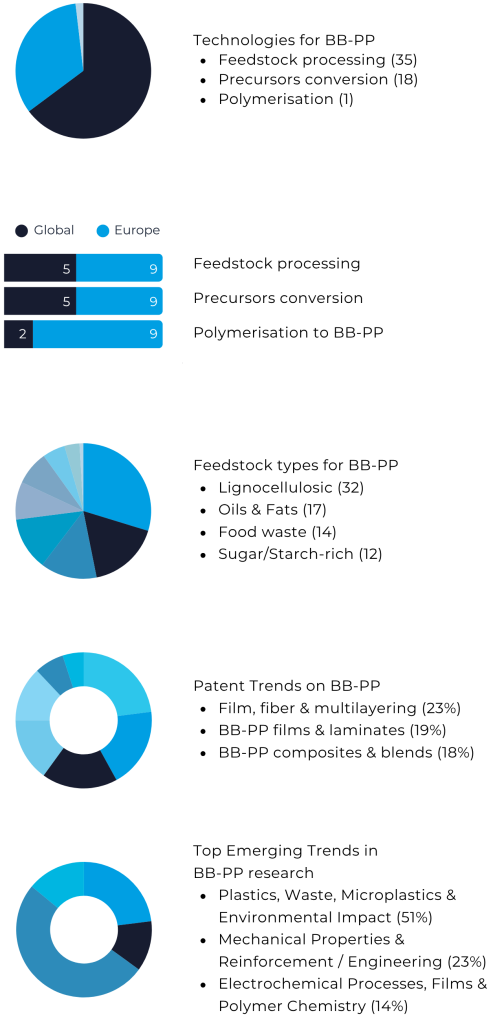
Bio-based Polypropylene (BB-PP) production in the European industrial landscape is structured across three core technological stages: feedstock processing, precursor conversion, and polymerisation. All these stages are supported by various commercially established technologies, with Technology Readiness Levels (TRL) at or near 9. This confirms that BB-PP deployment in Europe is not constrained by technological availability, but by the coordination and scaling of capacity across the value chain.
Availability of alternative European feedstock pathways strengthens the long-term resilience of BB-PP production
While global bio-based polypropylene production remains concentrated in sugarcane-derived pathways, Europe holds diversified feedstock potential across starch-rich crops, lignocellulosic biomass, oils and fats, and waste-derived inputs. These feedstock streams provide a structural opportunity to localise supply and reduce reliance on imported raw materials.
Research and patent activity further reinforce industrial readiness
Analysis of +650 research publications and +550 patents indicates sustained innovation in performance optimisation, environmental impact reduction, polymer chemistry, and traceability systems. The emphasis has shifted from fundamental material discovery toward application performance and certification, a typical signal of technologies transitioning into commercial scale-up.
Deployment and scaling implications
Scalable European bio-based polypropylene pathway is achievable, supported by mature upstream processes and ready-to-deploy polymer production infrastructure
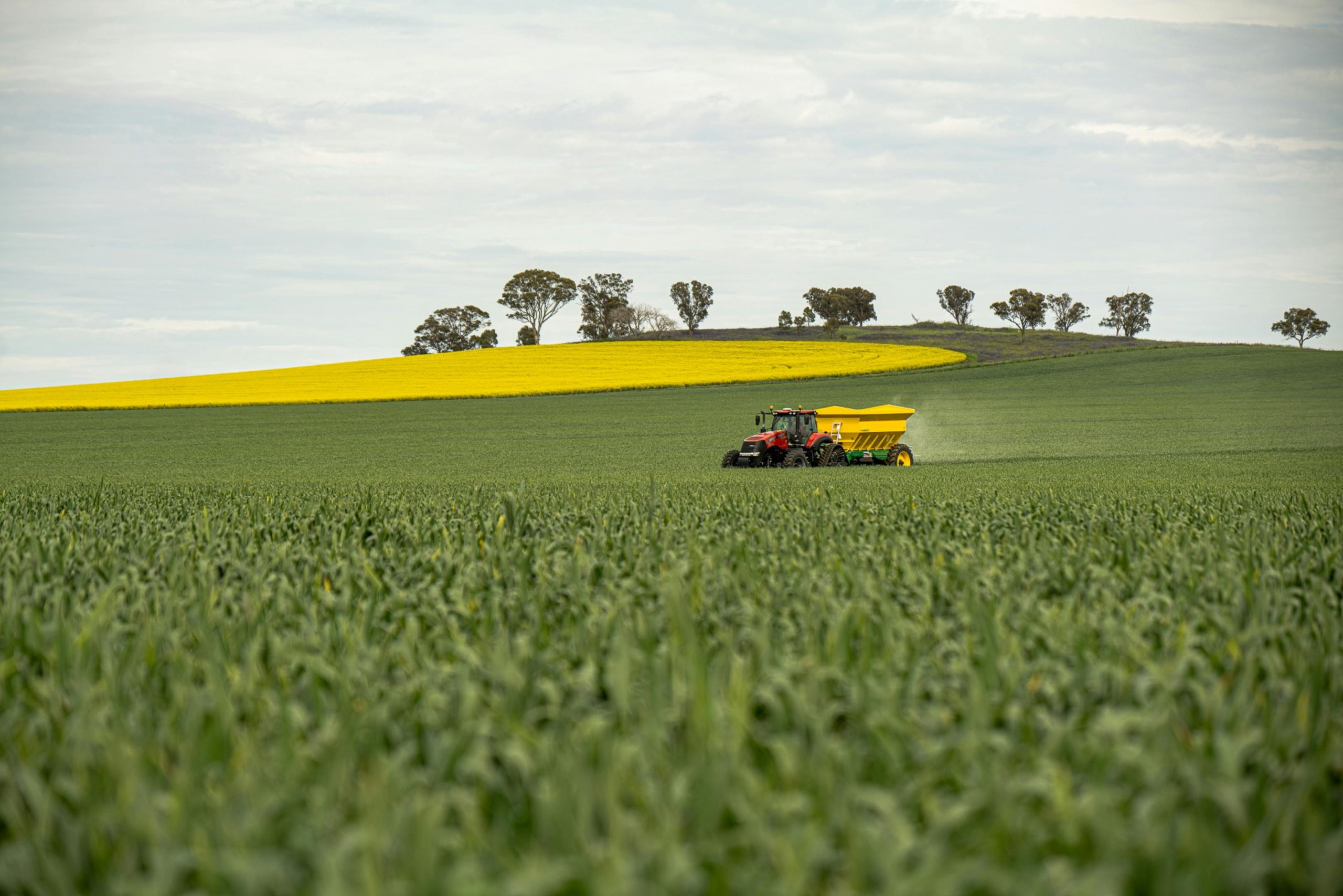
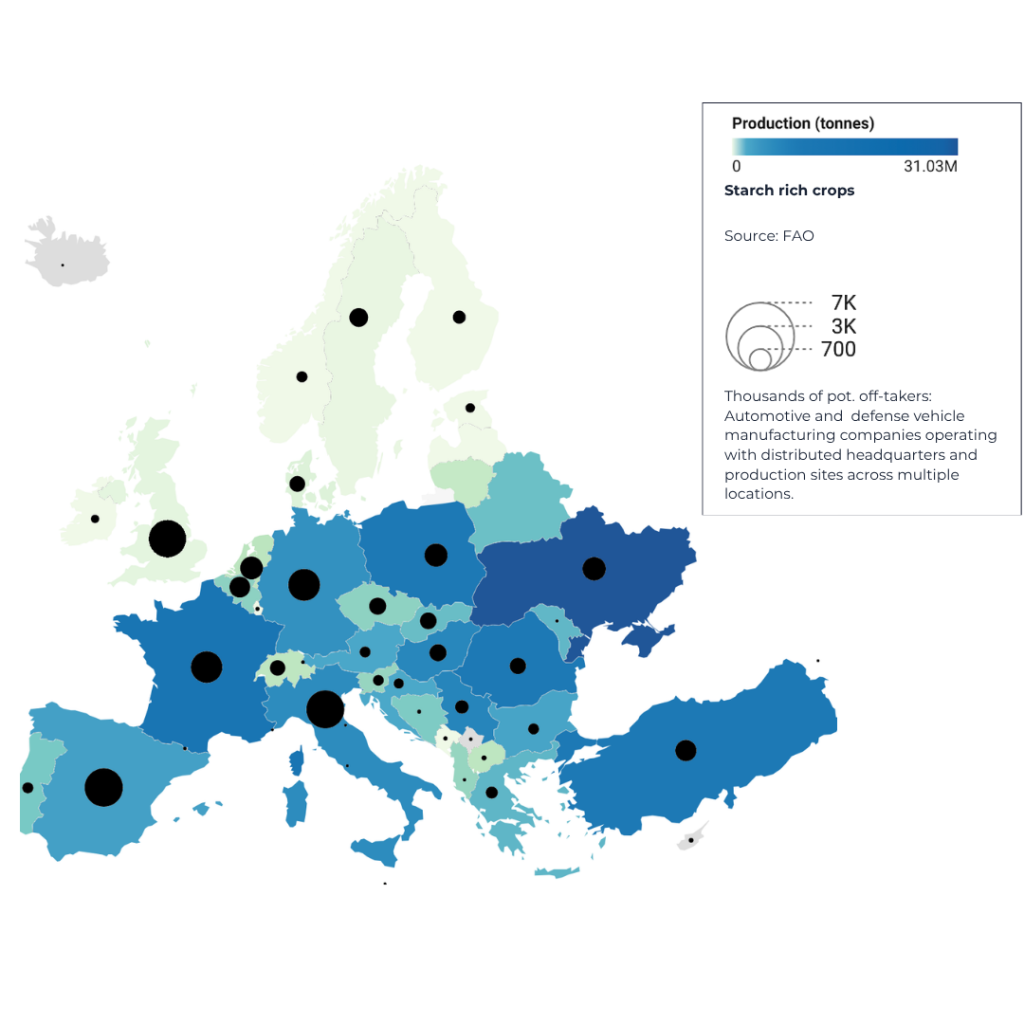
Exemplary: Starch-rich crops are widely grown across Europe and provide a viable feedstock base for bio-based plastics.
A pan-European supply supports the development of multiple regional production hubs located near automotive OEM clusters, reducing reliance on imported sugar-rich feedstocks such as sugarcane.
Feedstock generation, recovery, and precursor conversion are technologically mature (TRL 9), and polymerisation pathways are likewise near-commercial (TRL 9), requiring only final optimisation and industrial scale-up.
Commercial adoption of bio-based polypropylene in automotive applications has already begun
Applications such as front trunk liners in the Kia EV6 and luggage trays in the Hyundai IONIQ 6 demonstrate OEM acceptance and validation in serial production environments.
European material suppliers, including Borealis (Bornewables™), are already offering renewable polypropylene grades derived from alternative feedstocks, fully equivalent to fossil-based PP.
Outlook
Scaling Bio-Based Polypropylene in Europe
In line with the EU Bioeconomy Strategy, bio-based polypropylene represents a scalable and strategic opportunity. By aligning investment with coordinated pipelines, both public and private capital can accelerate projects that are bankable and capable of rapid cross-sector deployment.
Markets can drive lead demand, reinforcing adoption, standardisation, and supply chain maturity. Coordinated biomass sourcing and circularity strategies will secure predictable, resilient, and environmentally sustainable supply chains, meeting the needs of both industrial applications.
Leveraging these capabilities positions Europe as a global leader in bio-based solutions, enabling exports that advance commercial objectives while strengthening strategic influence.